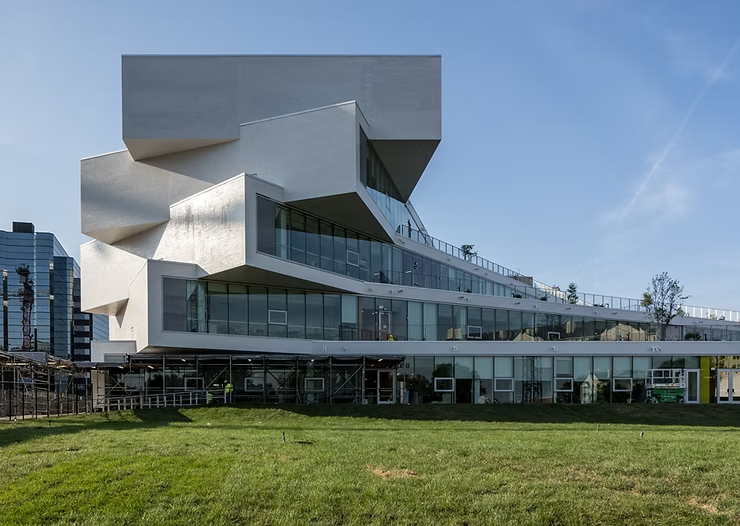

The project showcases the exceptional strength-to-thickness ratio of UHPC. Unlike conventional concrete systems, UHPC allowed the architect to achieve thin, highly detailed facade elements capable of spanning significant distances while resisting harsh marine environmental conditions. One of the most innovative aspects of the project is how the facade functions simultaneously as solar shading, architectural expression, and environmental control. The perforated skin creates dramatic shadow patterns throughout the building while reducing solar heat gain and maintaining visual transparency toward the Mediterranean waterfront. The installation process involved precise coordination between stainless steel support framing and prefabricated UHPC modules. Because the panels were relatively thin yet structurally advanced, careful lifting and alignment procedures were required during installation. Concealed attachment systems maintained the clean architectural appearance while allowing movement tolerance and long-term durability. MuCEM proved that UHPC could successfully bridge the gap between engineering performance and architectural artistry. The project remains one of the most influential examples of high-performance concrete architecture and continues to inspire architects exploring lightweight facade systems and perforated building envelopes.