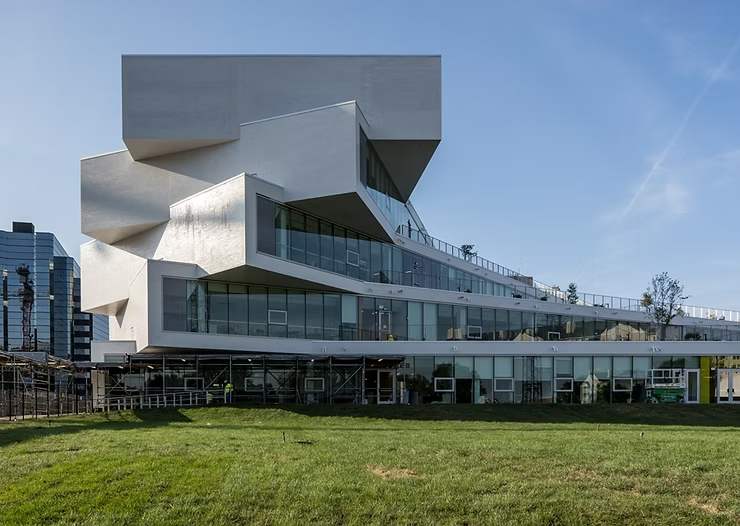

The project demonstrates the versatility of GFRC as a material capable of producing highly customized geometries while remaining significantly lighter than traditional precast concrete. One of the major advantages of using GFRC in this project was the ability to fabricate repetitive yet highly detailed panel forms with excellent dimensional consistency. The lightweight nature of GFRC simplified installation logistics and reduced structural loads, especially important in a seismic region like California. The installation process required extensive coordination between structural steel framing, digital modelling systems, and facade contractors. Each panel had to be individually numbered and aligned within the steel exoskeleton. Adjustable connection systems allowed tolerances to be maintained while preserving the seamless visual quality of the facade. The Broad Museum became a landmark project demonstrating how modern GFRC systems can support advanced computational architecture while maintaining practical constructability. Its innovative use of texture, geometry, and daylight performance continues to influence contemporary museum and civic architecture around the world.